Women’s Stroke Risk: Endometriosis and Early Menopause
Date
February 25, 2026

Date
February 25, 2026
Credits
Medical providers featured in this article

In Brief
Strokes seemingly come out of nowhere.
Most of the time, however, risk factors for stroke build up in the body over years. According to the stroke prevention guidelines from the American Heart Association and the American Stroke Association, some of those risks—such as endometriosis, early menopause and pregnancy—only affect women.
“The good news is that if we identify these risks early, we can correct many of them before a stroke strikes,” said neurologist Shlee S. Song, MD, co-director of Cedars-Sinai’s Comprehensive Stroke Program.
{{cta-block}}
What Is a Stroke?
There are two kinds of stroke.
The most common is ischemic stroke, which accounts for about 80% of cases. Ischemic strokes are often caused by atherosclerosis, plaque blockages in blood vessels serving the brain, or other types of blockages in these vessels.
“When brain tissue isn't getting enough blood flow, neurons will start to die off quickly,” said vascular neurologist Alexis Simpkins, MD, PhD, MSCR, director of stroke research at Cedars-Sinai and co-author of the updated stroke prevention guidelines.
{{providers}}
Hemorrhagic strokes are caused by sudden bleeding in the brain when a blood vessel bursts. This type of stroke can increase pressure inside the cranium, which can lead to further damage to brain tissue. Strokes require immediate medical attention. BE FAST is an acronym to help people identify stroke symptoms with sudden onset:
Balance loss
Eyesight changes
Face drooping
Arm weakness
Speech difficulty
Time to call 911 immediately.
Sudden, very powerful headaches can also be a sign of stroke. But strokes are often painless, and the only symptom is a sudden loss of function.
Overall, women have some different, sex-specific stroke risk factors than men.
What the Latest Stroke Guidelines Say for Women
The updated stroke prevention guidelines identify risk factors for stroke that are specific to women:
- Endometriosis
- Early or premature menopause
- Pregnancy, in particular complications from pregnancy, such as preeclampsia (sudden high blood pressure during pregnancy or postpartum)
What Is Endometriosis and Why Is it Linked to Higher Stroke Risk?
Endometriosis is a condition in which tissue similar to the lining of the inside of the uterus grows outside the uterus—usually on the lining of the abdomen or on the bowel, bladder or ovaries.
The immune system responds to remove the out-of-place tissue, which causes inflammation and long, painful periods. Other symptoms of endometriosis can include infertility, chronic fatigue and bowel and urinary disorders, such as irritable bowel syndrome.
Researchers estimate that at least one in ten women have endometriosis. But because symptoms are similar to those of other conditions—and because a true diagnosis requires laparoscopic surgery—getting diagnosed can be challenging, taking up to 10 years and requiring multiple physician visits—time during which the disease can spread and cause chronic pain.
The cause of endometriosis is not known, but according to the new stroke prevention guidelines, patients diagnosed with the disease are at an increased risk for stroke. The reason may have to do with the inflammation endometriosis causes.
“We think the inflammation associated with endometriosis increases problems like high cholesterol and high blood pressure, which are risk factors for stroke,” said Simpkins. “But we know how to manage these risk factors with lifestyle changes and medications, when needed.”
Problems getting pregnant and seeing the pregnancy to term are also increased for patients with endometriosis.
“When patients with endometriosis do get pregnant, they often have complications like preeclampsia and preterm delivery, which also increase their risk for stroke,” said Cedars-Sinai gynecologic surgeon Kacey Hamilton, MD.
More serious cases of the disease can result in surgeries to remove the uterus and ovaries, which in women of childbearing age causes early onset of menopause—yet another stroke risk factor.
Early or Premature Menopause and Stroke: What the Research Shows
Early menopause is when ovulation and menstruation stop before age 45. Before age 40, it’s called premature menopause. A related condition, primary ovarian insufficiency, also known as premature ovarian failure, is when periods stop suddenly any time before age 45 but the ovaries are still intermittently capable of releasing eggs.
When ovulation stops, the ovaries also stop producing as much estrogen, which increases the risk of heart/vascular disease and stroke, osteopenia and osteoporosis (weaker and thinner bones), depression and neurological diseases, such as Alzheimer’s disease and Parkinson’s disease.
“Estrogen is protective in women for our cardiovascular health,” said Hamilton. “Women who go through menopause early don't have that estrogen protecting them from the development of cardiovascular disease and stroke.”
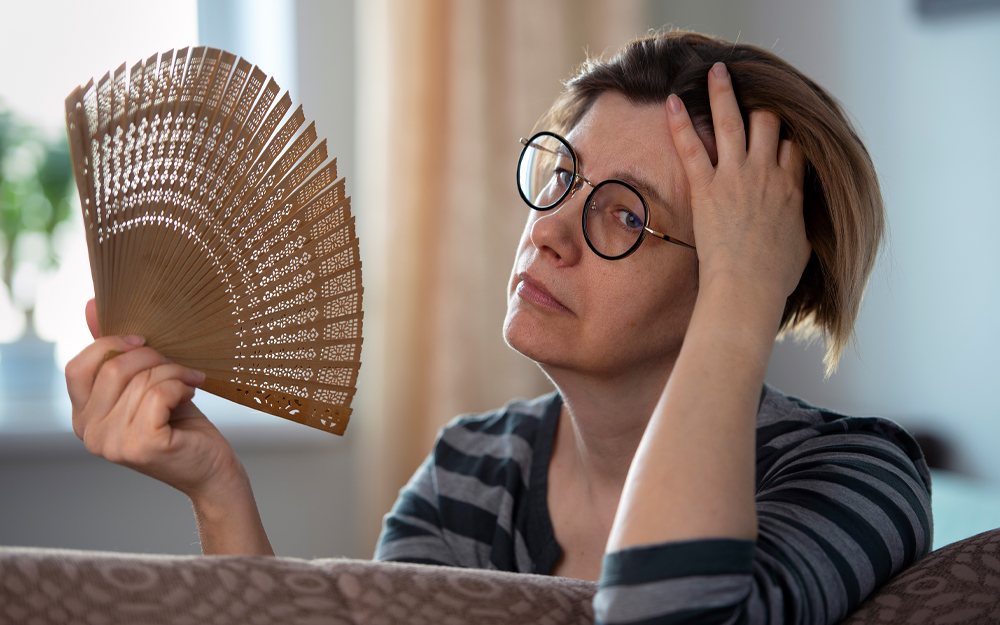
Many women also experience unpleasant symptoms during menopause, including hot flashes and night sweats, vaginal dryness and discomfort during sex, difficulty sleeping, joint and muscle aches, and brain fog.
Hormone replacement therapy is frequently prescribed for patients suffering these symptoms. But hormone therapy itself has been found to increase the risk of cardiovascular disease and stroke.
“Whether hormone therapy is right for you is an individualized risk-benefit analysis to be made in consultation with your doctor,” said Song. “There are safer options for women at higher risk of cardiovascular disease and stroke.”
We we want to make sure patients are living a full and joyous life.
Stroke Prevention: What You Can Do to Lower Your Risk
We know how to improve many risk factors for stroke, said Simpkins. They are listed in the American Heart Association’s Life’s Essential 8:
- Good nutrition
- Exercise
- Not smoking
- Healthy sleep
- Managing weight
- Controlling cholesterol
- Managing blood sugar
- Managing blood pressure
“It’s so important for people to hear that there’s no magic pill to prevent stroke,” said Song. “But with these lifestyle choices, you can lower your risk for stroke and so many other diseases.”
“Women with endometriosis or early onset menopause, in particular, need to monitor these risk factors regularly with their primary care physician,” said Simpkins. “Controlling cholesterol, blood sugar and blood pressure are all vitally important for cardiovascular and neurological health. And we know how to do it.”
Cedars-Sinai Specialists Personalize Stroke Prevention for Women
Patients with endometriosis, early onset menopause or complications related to pregnancy all require specialized and individualized care, which Cedars-Sinai is uniquely positioned to provide.
“Women deserve expert care for these complex conditions,” said Hamilton. “Cedars-Sinai has a multidisciplinary endometriosis center as well as a fantastic maternal-fetal medicine and high-risk OB-GYN team. We have not only expert OB-GYNs, neurologists and cardiologists, but also radiologists, genealogists and pain specialists.”
Cedars-Sinai also has a special women's health program.
“We work in a seamless fashion as a multidisciplinary team to ensure patients are getting the best medical advice and treatment possible, because we want to make sure patients are living a full and joyous life,” Simpkins said.
Frequently Asked Questions
Why do women with endometriosis have a higher risk of stroke?
Endometriosis can cause long-term inflammation throughout the body. Chronic inflammation can damage blood vessels and increase blood pressure and cholesterol, raising the risk of clots and stroke. Pregnancy complications and early menopause linked to endometriosis can further increase risk.
What is considered early menopause or premature menopause?
Early menopause occurs when periods permanently stop before age 45. Premature menopause happens before age 40. Both involve an earlier-than-usual loss of estrogen, a hormone that helps protect blood vessels, the heart and the brain.
How much does early menopause increase stroke risk?
Studies show early menopause increases stroke risk by about 20%-30%, with higher risk when menopause occurs before age 40. The earlier estrogen declines, the longer blood vessels are exposed to inflammation and other changes that promote cardiovascular disease.
What do the latest stroke prevention guidelines say about risks for women?
The updated guidelines recognize that some stroke risks affect women specifically, including endometriosis, early menopause and pregnancy complications. Doctors are encouraged to consider reproductive and hormonal history when assessing stroke risk, not just traditional factors such as blood pressure and cholesterol.
What are the most important stroke symptoms women should know?
BE FAST: balance loss, changes in eyesight, sudden face drooping, weakness in the arms and difficulty speaking can signal stroke. A sudden, severe headache can also be a warning sign. If symptoms appear, call 911 immediately—fast treatment can save brain function and lives.