Can a Smartwatch Really Detect Hypertension?
Date
May 14, 2026
Date
May 14, 2026
Credits
Medical providers featured in this article

In Brief
Popular wearable devices are adding blood pressure measurements to their suite of notifications.
If you wear such a device to maximize your health, you probably move when it says you’re sedentary, hydrate when it reminds you to drink water, and go to bed earlier when it analyzes your sleep habits. But what should you do if your smartwatch alerts you that you may have high blood pressure?
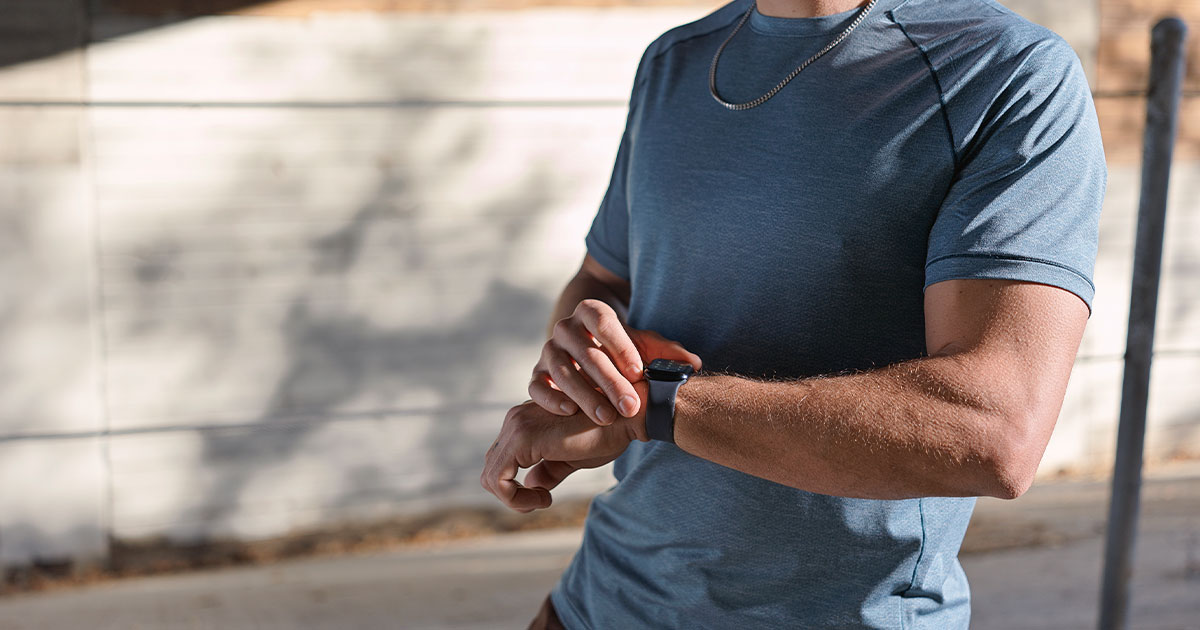
“The wearable technology uses sensors to detect blood-volume changes in the wrist’s small blood vessels,” said Seth Lichtenstein, MD, a Cedars-Sinai cardiologist. “A small LED in the back of the watch shines light into the skin of the wrist, which works because blood absorbs more light than other surrounding tissue.”
A Developing Technology
Some wearables with hypertension notification features have received clearance from the U.S. Food and Drug Administration, but the American Heart Association and the American College of Cardiology recommend caution when using cuffless blood pressure monitors.
“As a warning system, it can get people more attuned to their health,” said primary care provider Sweta Narasimhan, MD. “It can be a great starting point and can help us get somebody’s blood pressure cuff measurements, but it’s not a diagnostic tool.”
A recent study examined the accuracy of the Apple Watch’s hypertension notification feature in more than 2,000 adults. It showed that when the device detected hypertension, it was accurate 92% of the time. However, it missed hypertension in 59% of people with high blood pressure.
“I’m hoping it becomes more precise and accurate over time, because it can be helpful,” Lichtenstein said. “It can identify people with undiagnosed hypertension who might not otherwise seek screening. Getting an alert should make you say, ‘I should talk to my provider or a cardiologist to get an arm cuff measurement to confirm whether that’s the case.’”
Helpful in Certain Cases
In-office blood pressure readings aren’t accurate for people who become anxious at doctor appointments. For these individuals, wearables may provide more accurate readings.
“The devices provide frequent, unobtrusive measurements throughout the day, with multiple readings over a course of 30 days,” Lichtenstein said. “The readings happen in various contexts—when you’re working, when you’re moving and when you’re sleeping.”
Smartwatch hypertension alerts may benefit new moms, especially if they experienced preeclampsia (high blood pressure during pregnancy).
“When postpartum women are sent home, everybody’s focused on the baby, and nobody’s checking on the mom,” Narasimhan said. “This tool can be a great way to prompt them to start checking their blood pressure.”
However, research suggests current wearables may not provide accurate blood pressure readings for people with obesity or darker skin tones.
How to React to Smartwatch Hypertension Alerts
If your wearable device alerts you with a hypertension notification, make an appointment with your primary care doctor or a cardiologist to investigate.
“We’re able to dive deeper, comparing the alert to a blood pressure cuff device reading, which is the standard of care,” Lichtenstein said.
If you’re diagnosed with hypertension and your doctor wants you to monitor your blood pressure at home, the data from your wearable won’t be sufficient.
“Talk to a doctor to make sure that you’re picking up a validated device,” Lichtenstein said. “It’s very easy to take your blood pressure at home, as long as you’re following the technique.”
What to Do If You’re Worried About Hypertension
High blood pressure has no noticeable symptoms, in most cases. The best way to keep tabs on your health is to see a primary care doctor regularly.
“A primary care doctor can take an accurate medical history and do a physical examination and accurate blood work,” Lichtenstein said. “Some things might alert a doctor to say, ‘We should look into this further,’ or ‘You should follow up with a cardiologist.’ This could include a sedentary lifestyle, poor dietary habits, obstructive sleep apnea or a family history of high blood pressure.”
Lifestyle Changes to Reduce Hypertension Risk
These heart-healthy habits may help reduce your risk of hypertension:
- Manage your weight. People with a higher body mass index or obesity should lose weight gradually, so it stays off.
- Choose healthy foods. Eating a diet that is low in sodium, high in potassium, and rich in fruits, vegetables and whole grains should reduce hypertension risk. “You don’t have much control with prepared food, but if you’re making food at home, try to reduce salt,” Narasimhan said. “For something like a burrito, don’t salt every single ingredient individually, because it becomes too much.”
- Exercise consistently. Aim for 30 minutes of moderate-intensity activity five days a week, plus resistance training twice a week. “Brisk walking, jogging and things of that nature count as moderate-intensity exercise,” Lichtenstein said.
- Limit alcohol consumption. Men shouldn’t have more than two alcoholic beverages daily, and women shouldn’t have more than one daily drink. For overall health, the World Health Organization suggests eliminating alcohol entirely.
- Quit smoking. Programs and medications are available to make it easier to stop.
- Manage stress. Find ways to feel calmer, such as journaling, talking to a friend or listening to music. “Meditation sessions and deep, guided breathing might help,” Lichtenstein said.
Frequently Asked Questions
How can a smartwatch measure blood pressure?
A tiny LED on the back of the watch shines light into the skin of the wrist to detect changes in blood volume.
Is a smartwatch hypertension alert a reliable way to learn that you have hypertension?
No, smartwatches cannot diagnose hypertension. They can alert someone about the condition, so that they see a primary care doctor or a cardiologist for an official diagnosis.
What device do doctors use to diagnose hypertension?
A blood pressure cuff is the standard way to check blood pressure readings and diagnose hypertension.
Why is it important to see a doctor regularly to monitor blood pressure levels?
Hypertension has silent symptoms, so people who don’t have their blood pressure measured won’t know that they have the condition.
How can someone reduce their risk of hypertension?
Maintaining a healthy weight, eating nutritious food, exercising for 150 minutes per week, managing stress, limiting alcohol and quitting smoking can all reduce hypertension risk.

.jpg)