Cowboy Spine Surgeon
Date
November 24, 2025
Date
November 24, 2025
Medical providers featured in this article
In Brief
If you’ve ever been to the rodeo, you know what an exciting adrenaline rush it can be.
For the competitors, however, the events can be physically punishing, particularly for an athlete’s back. Bumped, bucked, tossed and trampled by animals many times their own size and weight, rodeo athletes can suffer sudden catastrophic spinal injuries, as well as deterioration from long-term wear and tear.
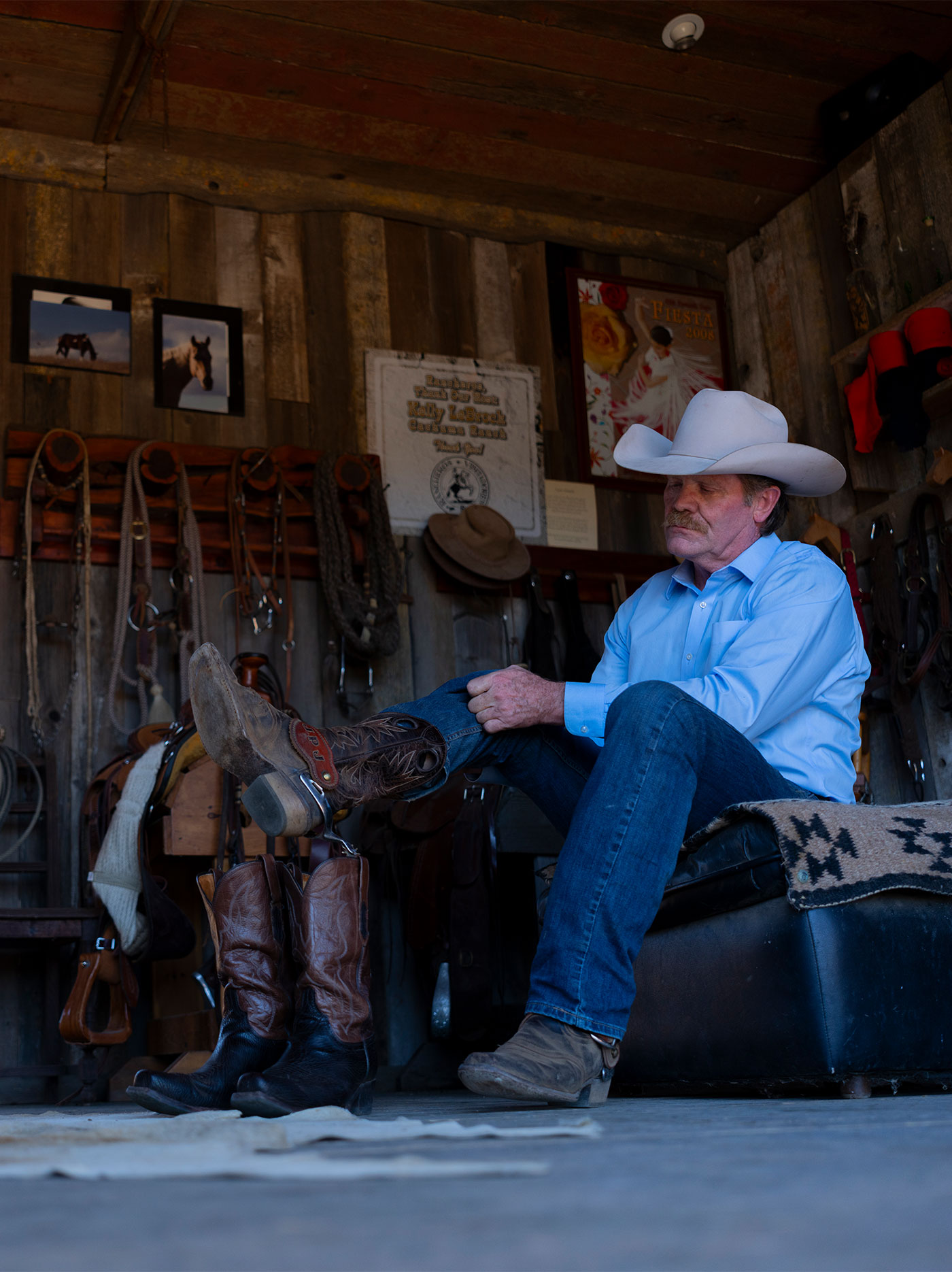
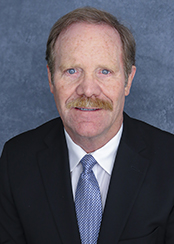
No one knows this better than J. Patrick Johnson, MD, medical director of Orthopaedics at Cedars-Sinai and senior advisor to the Cedars-Sinai Spine Center of Excellence. The renowned neurosurgeon grew up on a cattle ranch in Montana. As a young man, he competed riding bulls and broncs, and in addition to his regular practice, Johnson has come to be nationally known for his work repairing the spines of elite rodeo and other equestrian athletes, as well as working ranchers. His pioneering use of artificial discs and minimally invasive and robotic surgery have extended many careers that might otherwise have been cut short.
“I understand these people. I know what they do,” said Johnson. “And I know what it’s going to take to fix their backs so they can get back on the horse and compete—or just get back to work on the ranch.”
The Johnstons (With a T)
Lance Johnston and his wife, Tammy, run a horse training ranch in Central California. Johnston is 6 feet, 4 inches, sports a comfortable drawl and a black Stetson, and is one of the all-time winningest athletes in the sport of reined cow horse. However, many years of competition and training young horses left him suffering from excruciating back pain. After one event, the pain was so severe he left the stadium in a wheelchair.
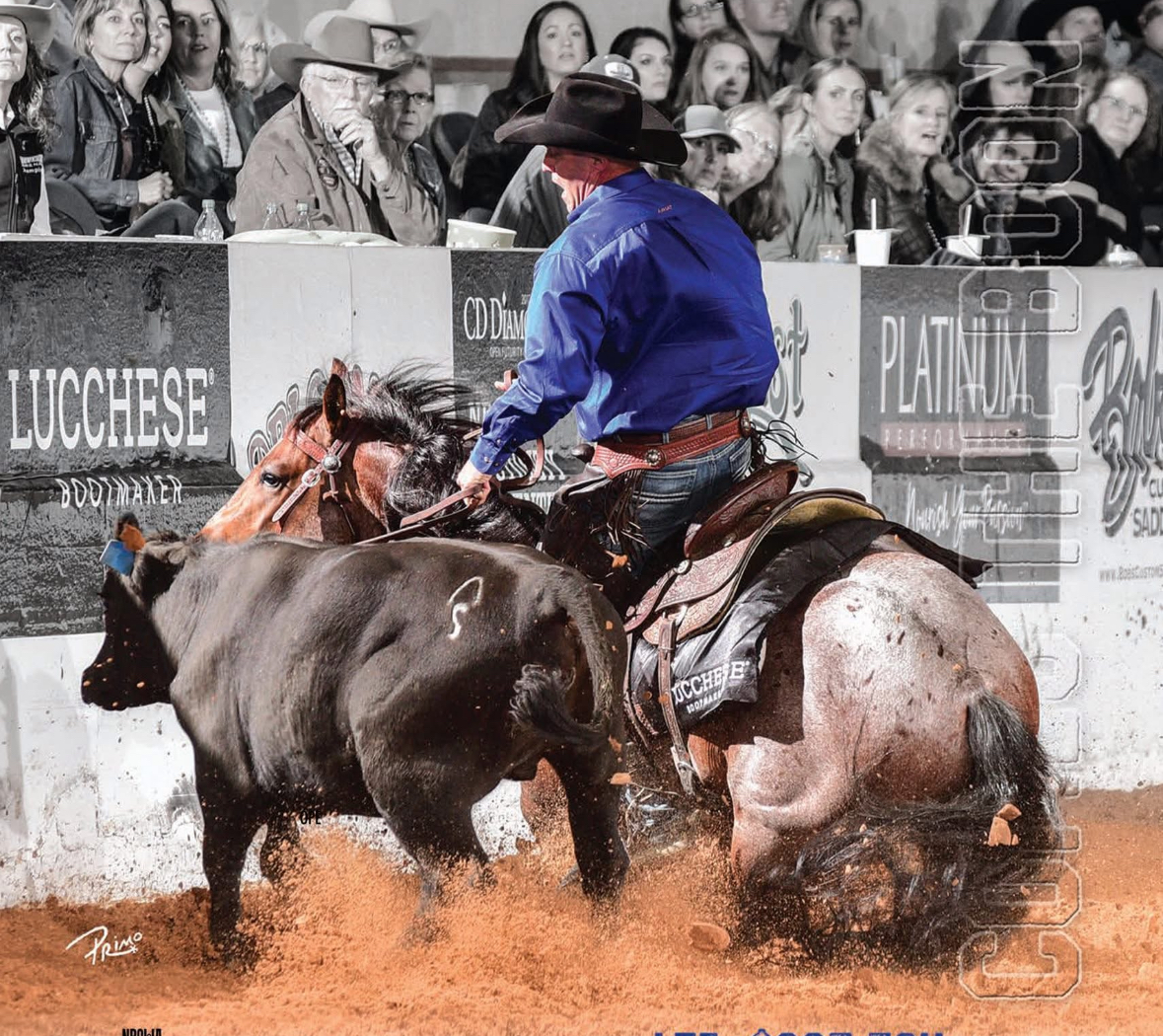
“I had to dress him every day because he couldn’t bend over,” said Tammy Johnston. “He couldn’t even walk, so he’d ride a scooter to the barn before getting up on the horses to do the daily training. That was our life for several years prior to surgery.”
Johnston had been putting off major spine surgery because he was afraid it would be career-ending.
“I’d talked with a few different spine surgeons over the years, and they were all like, ‘You just need to quit. We’re gonna have to fuse your whole back,’” he said. “But cow horses are my passion. I wasn’t ready to give up my career.”
Then, fellow rodeo athletes advised him to see Johnson at Cedars-Sinai.
Most patients just want the pain to go away, but these athletes want to ride, rope and compete again. That’s a different level of recovery.
“Just Get Me Back Out There.”
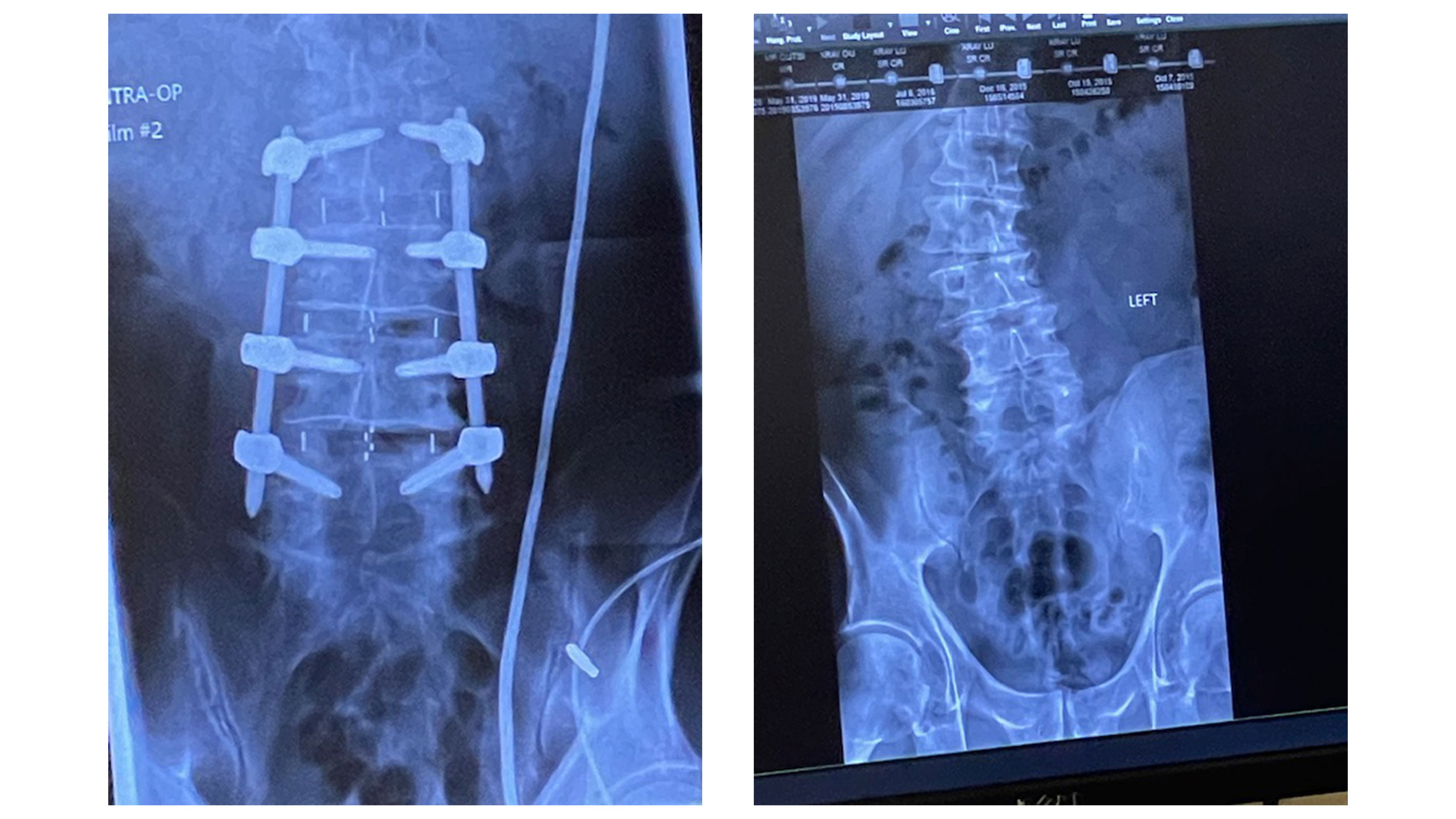
“When he first came to see me, it looked like a bomb had gone off in his back,” said Johnson. “Things were all bent and twisted up in there.”
In addition to damaged discs and deteriorated vertebrae, Johnston had scoliosis, which the surgeon said probably began in childhood and got worse over time.
“These aren’t gentle sports on the cowboy: a lot of torque, stress and strain on the spine,” Johnson said.
The surgeon noted that many athletes—particularly those from the punishing world of rodeo and equine sports—wish to be treated differently than other patients.
“Most patients just want the pain to go away,” he said. “But these athletes want to ride, rope and compete again. That’s a different level of recovery.”
For Johnston, the surgeon did not propose a complete fusion, which would eliminate all pain but reduce flexibility and end his career as a competitive horseman. Instead, Johnson designed a plan tailored specifically to the unique physical demands of the sport.
“We fused part of his lumbar spine, but we left the very bottom untreated—that’s the part that connects to the pelvis where you need to twist,” Johnson explained.
Since the surgery in 2020, Johnston experiences far less pain and has continued his elite run in the top ranks of reined cow horse athletes, winning many more trophies.
Veterinary Medicine or Neurosurgery?
Early in his life, Johnson says he planned to go to veterinary school and become a cow and horse doctor. Instead, he ended up following in the footsteps of his father who was a neurosurgeon—Montana’s first.
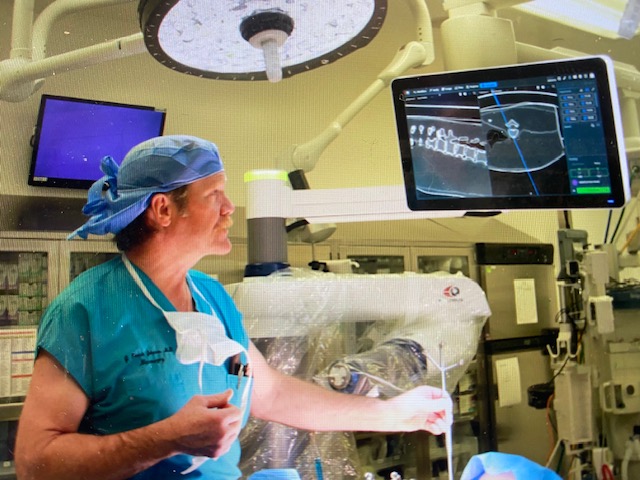
Across his 30-year career, Johnson has gained international recognition for his work in spine surgery, including his development of minimally invasive, robot-assisted techniques; motion-preserving surgery; and artificial disc technology, for which he ran the first clinical trials on the West Coast in 2002.
“These days, more neurosurgeons are opting to fuse spines, but I prefer to use artificial disks and laminectomies and other nerve decompression when I can,” Johnson said. “They’re less invasive and help preserve spinal flexibility. That’s good for everyone, but it’s particularly good for athletes.”
He has expanded his practice from Los Angeles and sees patients in clinics in Santa Ynez, Santa Barbara, Montana and Dallas-Fort Worth, a hub for rodeo and equine athletes.
It was at his clinic in Santa Ynez that Johnson first met with professional barrel racer Janel Flook.
A Barrel Racer With a Broken Back
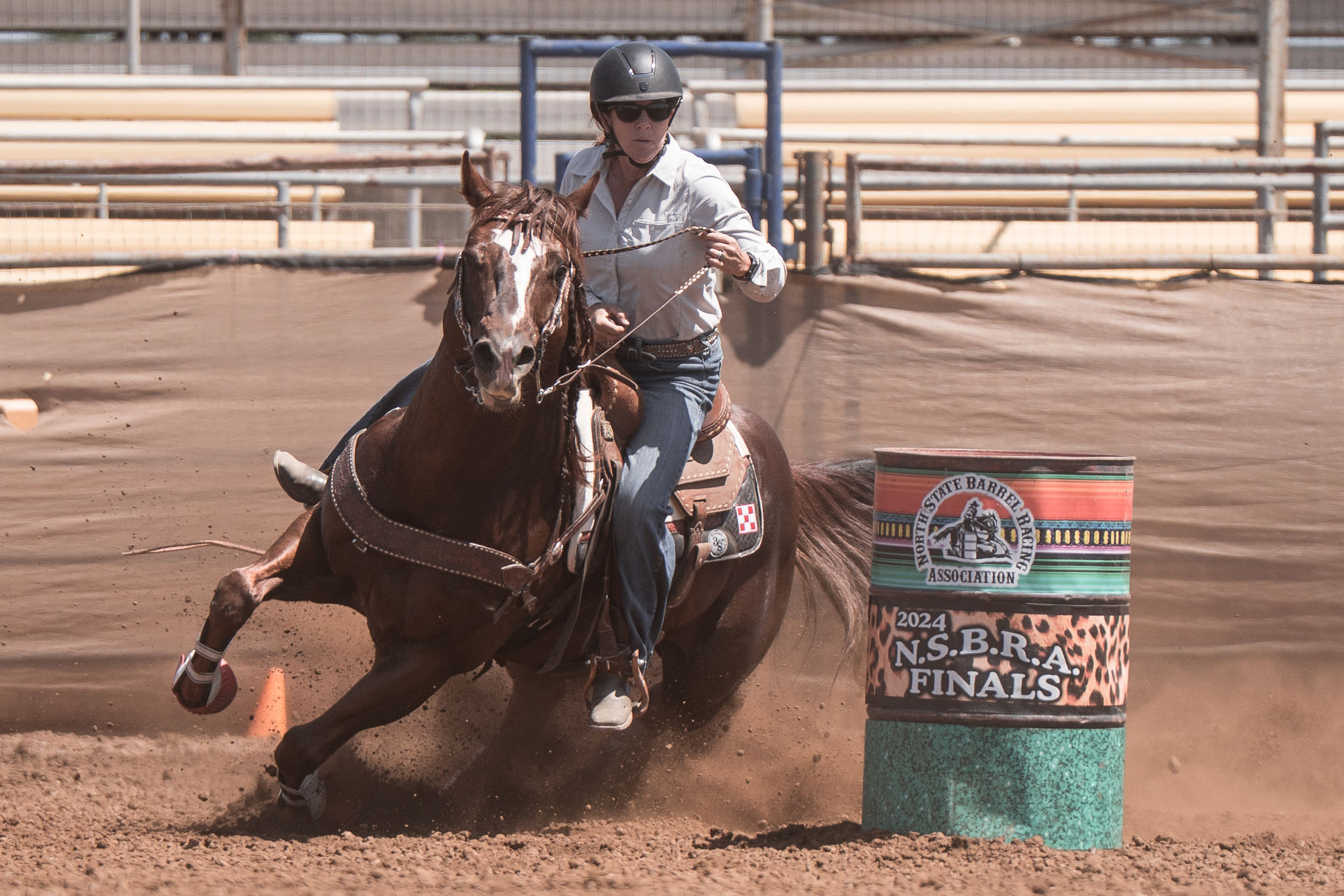
Flook began competing as a barrel racer at age 15. At 47, she still rides professionally and also trains younger riders at her ranch north of Paso Robles.
Early one morning in 2021, while preparing for a competition, Flook was thrown from a spooked horse and landed headfirst on asphalt. The fall left her with a badly fractured skull and her spine broken in three places.
She underwent successful brain surgery, but the neurosurgeon told her she was unlikely to walk again and certainly would never ride. Two weeks after the accident, however, Flook was able to get up on her feet, albeit with a lot of pain.
“I’d go into the barn with my walker, wearing a back brace, to feed and brush my horses,” she said. “They made me want to heal.”
In time, two of the three fractured vertebrae healed on their own, but the remaining fracture caused near constant pain.
Getting Back on the Horse
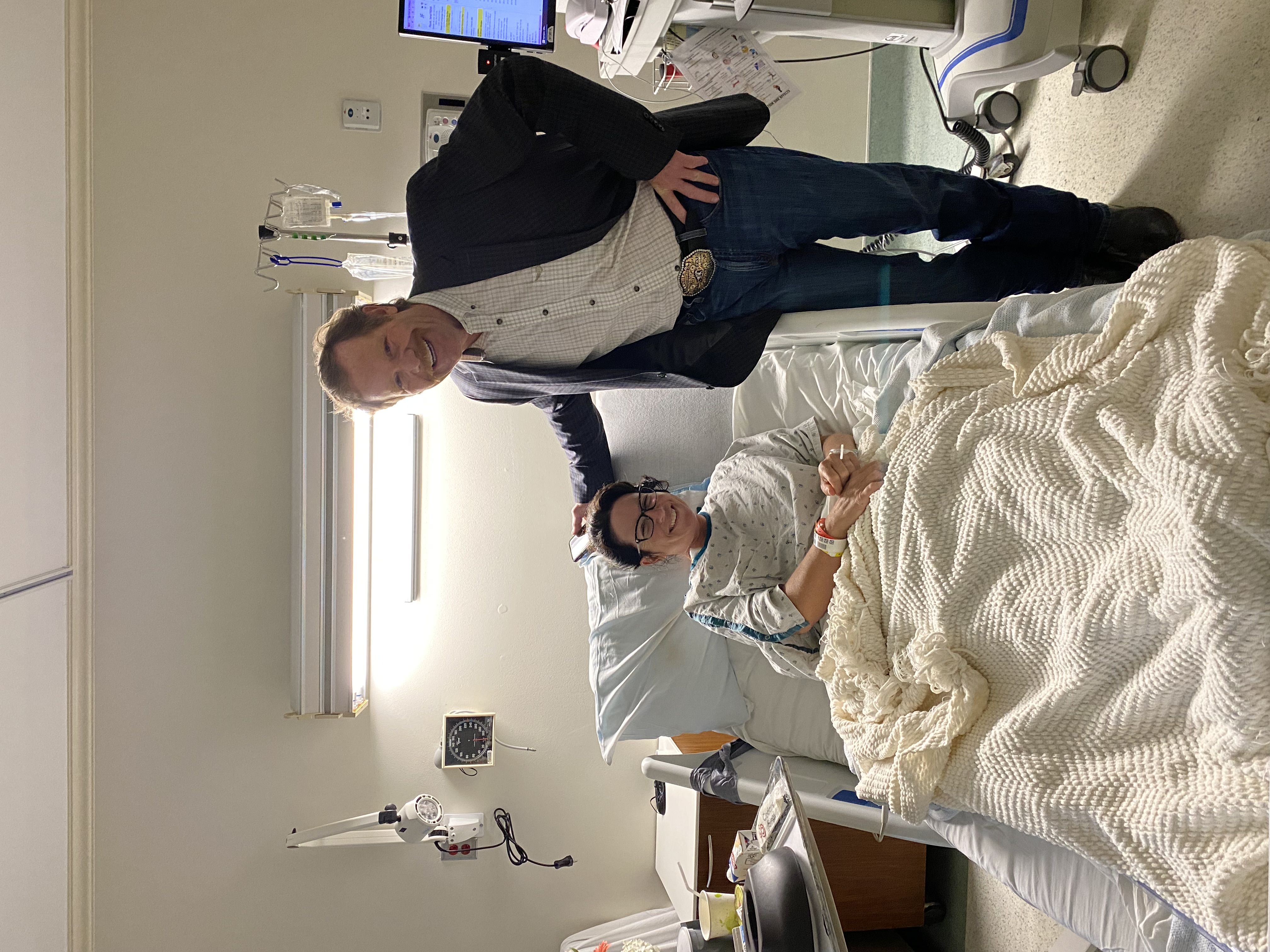
A Texas friend from the rodeo world insisted Flook go to see Johnson. The surgeon explained that Flook had a compression fracture in a vertebra in the middle of her back.
“Janel needed her spine repositioned, the vertebra removed and her column rebuilt with rods, bolts and screws,” Johnson said. “Working around the spinal cord is a high-risk, dangerous place. But I fix these things all the time, and I told her I expected a complete recovery, and that it might never cause another problem.”
Flook asked if she could postpone surgery until after the breeding season, because she handles the foaling of the breeding mares herself. Johnson acquiesced, though he told her she probably shouldn’t be doing that work with a broken back. But she managed to get through the season before her surgery.
At the hospital, Flook was nervous about the needles and IV, but the nurses eased her anxiety, and the procedure was a success.
After the operation, she could only lift two or three pounds, but Johnson told her to walk as much as possible.
“I’d walk to the barn, feed my horses, and I gradually built up my strength that way,” Flook said. “After about a month, I started physical therapy. At three months, I was cleared to ride again, which just felt amazing—like I was home.”
Four months after surgery, Flook entered an amateur-level barrel race. She’s now back competing as a pro and recently won her first post-surgery prize money in a professional rodeo.
The Right Approach
Flook and the Johnstons are particularly grateful to Johnson for his approach to their injuries, and for listening to them and understanding their needs.
“He didn’t tell me I can’t ride again. He didn’t tell me I’m crazy for even wanting to ride,” said Flook. “He just said, ‘Let’s figure out how to get you back on your horse,’ which was a huge comfort.”
“You’re talking to him, and you feel like you’re talking to somebody you were raised with on the ranch, who can connect with you on that level of where you come from,” Johnston said. “And then he can step in as a surgeon, and he knows just what you need to get you back out there. It’s a rarity.”
Frequently Asked Questions
What causes sudden lower back pain after a fall or injury?
Sudden lower back pain after a fall can happen for a number of reasons, some more serious than others. They include:
- Strained muscles or sprained ligaments
- Bulging or herniated disc causing a pinched nerve
- Other inflammation in the small joints of the spine
- Bone bruise or fracture
How do I know if a back injury is serious?
You should seek medical attention if your back pain is severe, is getting worse instead of better or if you have any of the following symptoms:
- Pain that spreads down your legs
- Numbness, tingling or weakness in your arms or legs
- Trouble walking
- Loss of bladder or bowel control
You should also get checked if you have osteoporosis, or you are over age 60 and injured your back in a fall. When in doubt, it’s safest to have a doctor evaluate the injury.
When should you see a spine surgeon for back pain?
You should see an orthopedist for any serious back injury. Back pain caused by a strain or nerve impingement often responds well to rest, over-the-counter pain relievers and maybe some ice. If the pain persists, physical therapy may help. If none of these remedies are helping and your pain persists, it’s time to see an orthopedic surgeon to be evaluated.
How long does it take to recover from spine surgery?
Recovery can take anywhere from a few weeks to several months. The key is to return slowly, follow rehab exercises and avoid pushing too hard too soon to protect the spine and ensure a full recovery.
What are the alternatives to spinal fusion surgery?
A lot of back pain will improve without surgery. Nonsurgical treatments include physical therapy, anti-inflammatory medications, steroid injections and bracing.
Some conditions, such as severe scoliosis, will require some amount of fusion. But for conditions such as nerve impingement and herniated discs, there are surgical alternatives that preserve more motion in the spine. These include artificial discs, laminectomy and other decompression surgeries that remove pressure from nerves without fusing bones together.