From AFib to Fitness Buff: Building a Healthier Heart
Date
June 16, 2026

Date
June 16, 2026
Medical providers featured in this article
In Brief
Claudia Huerta suffered from symptoms of atrial fibrillation, addressing them with lifestyle changes, until Cedars-Sinai experts discovered her diagnosis and offered a minimally invasive solution: catheter ablation.
Like many people stuck at home during the COVID-19 pandemic, Huerta (44), a payroll manager from Maywood, California, started eating more. She started drinking more. She started moving less. She was stressed out, gaining weight and—before she knew it—experiencing heart palpitations and feeling breathless for no apparent reason.
“I was tired all of the time,” said Huerta. “But I assumed those symptoms were a result of my unhealthy lifestyle choices and increased stress.”
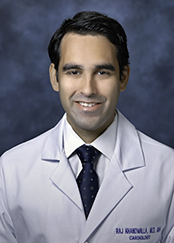
She began an exercise program at a neighborhood fitness studio, but her symptoms didn’t improve. Eventually, the heart palpitations caused such severe shortness of breath and overwhelming fatigue that Huerta’s primary care physician sent her to cardiologist Raj Khandwalla, MD, director of Digital Therapeutics at the Smidt Heart Institute at Cedars-Sinai.
{{providers}}
After blood tests, a cardiac stress test and an echocardiogram to check the structure and function of her heart, Khandwalla diagnosed Huerta with atrial fibrillation (AFib), despite her being two decades younger than the average patient.
“Although atrial fibrillation is a very common condition, it’s rare that a patient in their 40s develops it,” said Khandwalla. “However, we learned that she had a family history of the condition, which explained her early onset.”
Huerta stepped up her commitment to lifestyle changes in an attempt to manage her new diagnosis. She stopped drinking alcohol altogether. She was eating better, exercising regularly and seeing the pounds drop off the more she picked up her weights.
I had an opportunity to continue the amazing transformation my body was on and undergo a one-time procedure that would keep me medication-free.
Despite this progress, Huerta still suffered from symptoms and remained at increased risk for stroke.
This left her with two choices: take blood thinner and powerful antiarrhythmic medications for the rest of her life, or undergo catheter ablation in an attempt to stop the AFib.
Laying the Groundwork for a Better Life
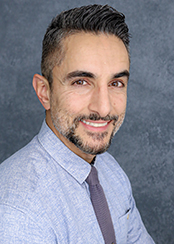
“With an ablation procedure, there’s no cutting into the body—it’s all minimally invasive,” said cardiac electrophysiologist Ashkan Ehdaie, MD, associate professor of Cardiology and associate director of the Clinical Cardiac Electrophysiology Fellowship Training Program at Cedars-Sinai. “Patients can usually go home the same day and may eventually stop their AFib medications. However, a healthy lifestyle is also important to prevent the condition in the long haul.”
After meeting, Huerta knew it was the route she wanted to take.
“I had an opportunity to continue the amazing transformation my body was on and undergo a one-time procedure that would keep me medication-free,” said Huerta. “The decision was easy.”

Known as “electricians of the heart,” electrophysiologists like Ehdaie perform catheter ablation procedures to restore the heart to normal rhythm. During the procedure, electrophysiologists use specialized tools to treat specific areas of the heart to eliminate abnormal electrical impulses. For AFib, these are areas that may trigger and promote the condition.
Huerta underwent the procedure in November 2021 with no complications.
Just one month after the procedure, she was back at work and the gym, but with a new goal in mind: competing in her first muscle- and bodybuilding competition, without supplements or muscle enhancers.
{{cta-block}}
Huerta walked away winning both a first and second place medal.
“It was the most amazing moment,” said Huerta. “Everything I had worked so hard for came full circle.”
For Khandwalla and Ehdaie, Huerta’s journey was an inspiration to watch firsthand.
“My job was the easy part—her end of the bargain was much, much more challenging,” said Ehdaie. “Her eyes were set on transforming her life and competing as a fitness model, and she achieved it all.”
Frequently Asked Questions
How does catheter ablation stop atrial fibrillation (AFib)?
AFib happens when abnormal electrical signals in the heart cause the upper chambers of the heart to beat irregularly and sometimes fast. Catheter ablation treats AFib by targeting and neutralizing the source of those abnormal signals.
During the procedure, an electrophysiologist gains access to the bloodstream through small needle punctures in the leg veins. Flexible tubes (catheters) are advanced through the veins which lead directly into the heart. With the guidance of additional tools, ablation is performed in specific areas. Using heat (radiofrequency energy), cold (cryoablation) or pulsed electrical field ablation (PFA), the doctor creates small, controlled scars in precise areas of the heart tissue. This stops the problem-causing electrical signals, allowing the heart’s natural rhythm to take over again.
Who is a good candidate for catheter ablation?
Catheter ablation may be a good option for people with AFib who:
- Have tried medications that did not totally control AFib, or had side effects from those medications
- Have paroxysmal (intermittent) or persistent AFib
- Want to reduce ongoing symptoms and avoid long-term use of AFib medication
- Want to improve their quality of life
- Have been to the hospital because of atrial fibrillation
- Are otherwise healthy enough to undergo a minimally invasive heart procedure
Who should not get catheter ablation?
Catheter ablation may not be recommended for everyone. It may not be the best option for people who:
- Have had atrial fibrillation for many years without symptoms
- Have no AFib symptoms and are doing well with medications
- Have advanced heart disease or serious medical conditions that make the procedure higher risk
- Are unable to lie flat for an extended period or undergo anesthesia
- Have certain bleeding disorders or uncontrolled infections
In some cases, ablation is delayed until other medical issues, such as uncontrolled high blood pressure or heart failure, are better managed. A detailed evaluation will help make sure the procedure is appropriate for a given patient.
How long does it take to recover from catheter ablation for atrial fibrillation?
Recovery from catheter ablation is usually fairly swift. Most patients:
- Go home the day of the procedure or the next day
- Resume light activities within a few days
- Return to normal routines within a couple of weeks
Your doctor may advise avoiding strenuous exercise or heavy lifting for a short time. It’s also common to continue heart rhythm or bloodthinning medications temporarily while the heart heals. However, it can take up to three months for the full effects of ablation to be clear. During this healing period, some patients experience brief AFib episodes that typically improve over time.
Is catheter ablation always curative for AFib?
No, catheter ablation is not a guaranteed cure, but it can be highly effective. AFib is often a chronic condition influenced by age, genetics, heart structure and other medical issues. The goal is to reduce the burden of AFib and reduce the likelihood of stroke and hospitalization for AFib and AFib-associated medical conditions such as congestive heart failure.