Appendicitis Symptoms: What It Feels Like and Where It Hurts
Date
April 28, 2026
Credits
Date
April 28, 2026
Credits
Medical providers featured in this article
In Brief
At some point in their lives, approximately 5 to 9 out of every 100 Americans will be diagnosed with appendicitis—a condition where the appendix becomes inflamed and could rupture. For most of these patients, stomach pain is their first clue that something is wrong.
Rodrigo Alban, MD, professor of Surgery and chief patient safety officer at Cedars-Sinai, explained: “The appendix is part of the large intestine, and its function is still largely a mystery. It might offer a breeding ground for healthy gut bacteria after an infection, or it may do nothing at all—even experts don’t know. But when it ruptures, it has to be removed.”
{{providers}}
What Is Appendicitis?
The appendix is about 4 inches long and shaped like a tube with one closed end. In adults, sometimes the appendix can become clogged, causing pressure to build and the organ to swell as it continues producing its normal secretions.
Once this process starts, the appendix becomes inflamed and can rupture—a dramatic bursting that causes a heavy flow of infected material into the abdomen.
I will ask a patient, “What is your favorite food, and would you want to have some right now?” If a patient says they’re not interested in their favorite dish, I know their pain is so bad that it has caused loss of appetite.
In children, certain tissues in the appendix that are rich in immune system cells can become swollen. When children get appendicitis, it’s usually a result of this and not an obstruction.
Regardless of what causes appendicitis, the condition is dangerous and requires immediate medical attention.
Where Is Appendicitis Located, and What Does It Feel Like?
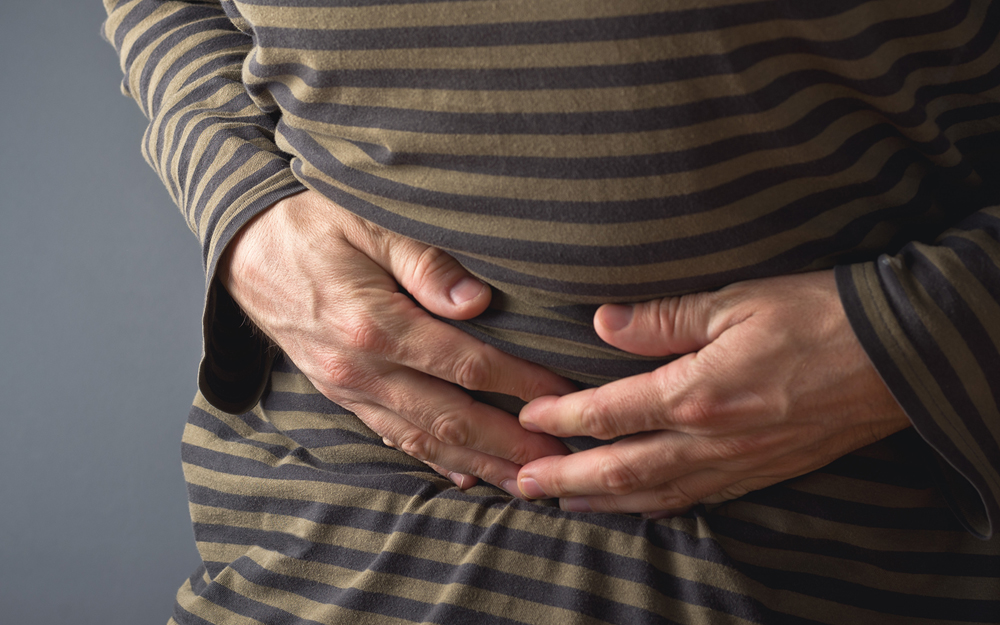
Appendix pain typically starts as mild discomfort near the belly button and is often mistaken for a stomachache in the beginning.
As the appendix becomes more inflamed and swollen, the pain becomes sharper and moves to the lower right part of the abdomen. The stomach may be tender to the touch, and you may have nausea and not want to eat.
Alban said, “I will ask a patient, ‘What is your favorite food, and would you want to have some right now?’ If a patient says they’re not interested in their favorite dish, I know their pain is so bad that it has caused loss of appetite.”
Appendix pain may become worse when you move, walk or cough. Finally, as the appendix swells and comes close to rupturing or tearing, you may develop a fever.
Are Appendicitis Symptoms Different for Women?
Appendicitis symptoms are generally the same for women and men. However, appendix pain can be harder to diagnose in women because it has similar symptoms to ovarian cysts, menstrual cramps and other gynecologic conditions.
Also, appendix pain can be located in a different area in pregnant women because the organs shift as the fetus grows. Pregnant women with appendicitis might complain of pain in the back or upper right part of the abdomen instead of the lower right part of the abdomen.
{{cta-block}}
When Should You Seek Medical Treatment for Stomach Pain?
You should go to the emergency room right away if:
- Your stomach pain is severe and grows worse over time.
- Your stomach is tender to the touch.
- Your stomach pain moves to the lower right abdomen (or the back or upper right abdomen, if you are pregnant).
- Your stomach pain becomes worse when you move, walk or cough.
- Your stomach pain is accompanied by fever, vomiting (especially blood), nausea, or dark or black stool.
How Is Appendicitis Diagnosed?
To diagnose appendicitis, your doctor will start by performing a thorough physical examination. They may administer a blood test to check for a high white blood cell count, which indicates there’s an infection. They also may order an imaging test, such as a CT scan or ultrasound, to get a view of the appendix and the surrounding area.
Your doctor also may order tests to rule out other gastrointestinal conditions, such as gastroenteritis and bowel diseases, as well as kidney stones in older people.
How Is Appendicitis Treated?
Once you’ve been diagnosed with appendicitis, there are several options for treatment.
If the appendix is swollen and infected but has not torn, it’s usually removed with a minimally invasive procedure requiring a few small incisions. Patients often go home on the same day as the procedure.
Recent studies have shown that in some uncomplicated cases where the appendix hasn’t ruptured or formed an abscess, antibiotics alone can successfully treat the infection without the need for surgery. However, surgery remains the standard treatment for appendicitis because it definitively removes the problem and has much lower rates of recurrence than if the appendicitis is treated with antibiotics alone.
If the appendix is ruptured, a more complex surgery is required. Any abscess has to be drained, and then the patient is treated with antibiotics to reduce the infection. Once the swelling goes down, the appendix is removed.
More severe cases might require an open surgery, with a larger incision than the minimally invasive procedure.
What Should You Do If You Suspect You Have Appendicitis?
Most of the time, a stomachache isn’t a sign of a serious health problem. But if your stomach pain continues to get worse over 12 to 24 hours, migrates to the lower right abdomen or is accompanied by other serious symptoms, you should go to the emergency room as soon as possible to have it checked out. The sooner appendicitis is treated, the better the outcome for the patient.
Frequently Asked Questions
What side is your appendix on?
The appendix is typically located in the lower right side of the abdomen.
Where does appendicitis hurt?
Appendix pain often begins near the belly button and moves to the lower right side of the abdomen.
What does appendicitis feel like?
Appendicitis often starts as a dull stomachache and becomes sharper, more localized and more painful over time.
Does appendicitis pain come and go?
Appendix pain may seem intermittent when it first starts, but worsening or migrating pain should be evaluated by a doctor promptly.
Can appendicitis symptoms be different in women?
Appendicitis symptoms are generally the same for women and men, but the pain may occur in the upper right abdomen in pregnant women.